Tag: story

  • How storytelling is like dream work, only easier

    How storytelling is like dream work, only easier

    Personal story work reminds me a little of dream work, but easier.  Dreams are set in a coded language that can be hard to crack. 

    But with stories, the code or reason we have chosen that story to tell, will, with sincere searching always be there for the finding. The story has lessons for us and either we know the lesson already and we want to share it (and deepen our connection to it), or we are not quite sure and it will be in the crafting and telling process that we discover why the story is calling us.

    Stories that call to be told need time, thinking, patience, an audience and a desire to illuminate something of this human existence for the benefit of others (and ourselves).

    Even a romping adventure of a story, an hilarious rolling in the aisles comedy story, or a tragic drama, needs, for it to impact us, make an impression, nourish our souls for longer than the time it takes to tell the story, it needs to give an insight into the human condition, an internal journey, as well as the external journey.

    Even with the most ordinary external events, a story can still be amazing and memorable, if there is reflective and meaningful internal journeying about the lesson of the moment.

    But a story that is a series of ‘…..and then …..   and then…    and then  …’  all on the external level, all possibly dramatic, adventurous and funny, is still, if we can’t get a sense of, feel into, the person who is experiencing it, just a series of events.   If we don’t know what they are feeling and if they don’t make sense of the events from the distance of time in their own unique way, we are none the wiser about them or life, we will struggle to remember the story, and the teller will not have made meaning.

    We tell about external events all the time just because they happened to us: it  is enough for us to share just the events with our friends and families; this is how we process and our listeners bear witness.  But for a storytelling, a time set aside for story, and for the creative process that creates a story out of the clay of life, there needs to be more. 

    There needs to be crafting and purpose, reflection and meaning.

    Them’s fighting words I know.  And sometimes I think I am way too over the top about this aspect of story.  I mean, someone has a great adventure to tell, they tell it really well with lots of drama, it is funny and exciting and I think ‘Wow that’s amazing’, and yet I want more.  There is a nagging urge to understand who this person is and how they think, what is their unique take on these events and this one life.

    So is that the only way to tell a story?

    Of course not.  Story is much bigger than that.

    But it is an essential ingredient for a good personal story, one that is crafted and rehearsed for telling. Otherwise as my spade calling friend says ‘they’re wasting my time,’

    And I am reassured that this is not just my take on a good personal story.  I have it on good authority, from other storytelling teachers, screenwriters, writing teachers and memoirists.  

    Internal journey, meaning making, reflection on what it means to be human are essential ingredients to a good personal story.

  • Does a story slam feel like a ritual sacrifice with your heart in your hands?

    Does a story slam feel like a ritual sacrifice with your heart in your hands?

    It is that time of the month again, and I am not referring to the women’s cycle of re-creation and renewal, nor to the full moon bursting in the sky, but to the time of the month when storytelling events are looming in my calendar. 
     
    I host a monthly true storytelling night in Woodend, a town just down the road from where I live and as part of hosting I always prepare and tell a personal story. 
     
    I do this because it warms up the room, I fill a spot on the list if we are not overflowing with tellers, and it is part of my practice, part of why I put the event on, so I have a place to share and tell, practise and learn about this art. 
     
    And three days later, sometimes, I head down the highway with the same story in my pocket, to Melbourne, to tell on the big stage of‘The Moth’, where the lights are so blinding you hardly know the audience is there and people hang out in pairs or small groups, and your heart and soul, your story, is rated, compared and given a public number (its a competition).
     
    It is very different to the intimate, country, community event in Woodend, where we are flexible with time and no one is ranked or rated, and even if you come on our own you’ll be chatting across chairs almost as soon as you arrive.
     
    And I am becoming more and more convinced that ‘story competition’ is a travesty, especially when the stories being told are personal stories.  Spoiler alert: mini rant to follow.
     
    In ‘The Moth Story Slam’ three groups of people in the audience are chosen as judges.  I can guess what the criteria are for judging the stories – theme, time, engagement perhaps? But I don’t know for sure.  Each set of judges give your story a number which is placed on a public board, next to all the other story scores.   A comparison feast.
     
    This rating tells me little, even if I read between the numbers, about how to improve my telling. It does not tell me what was liked or not liked, it is not designed to support me but to rate me in comparison to the other stories, and it is soul frightening.
     
    And as Parker PalmerBrene Brown and others explain, for the soul to show up it needs a safe, non-judgmental space; the soul needs love to appear. 
     
    How can a personal storytelling event draw on the depth of human experience, how can a person feel free to tell a story from their shy, vulnerable soul, when that delicate seedling of understanding and wholeness is to be judged, rated, compared and decided upon?
     
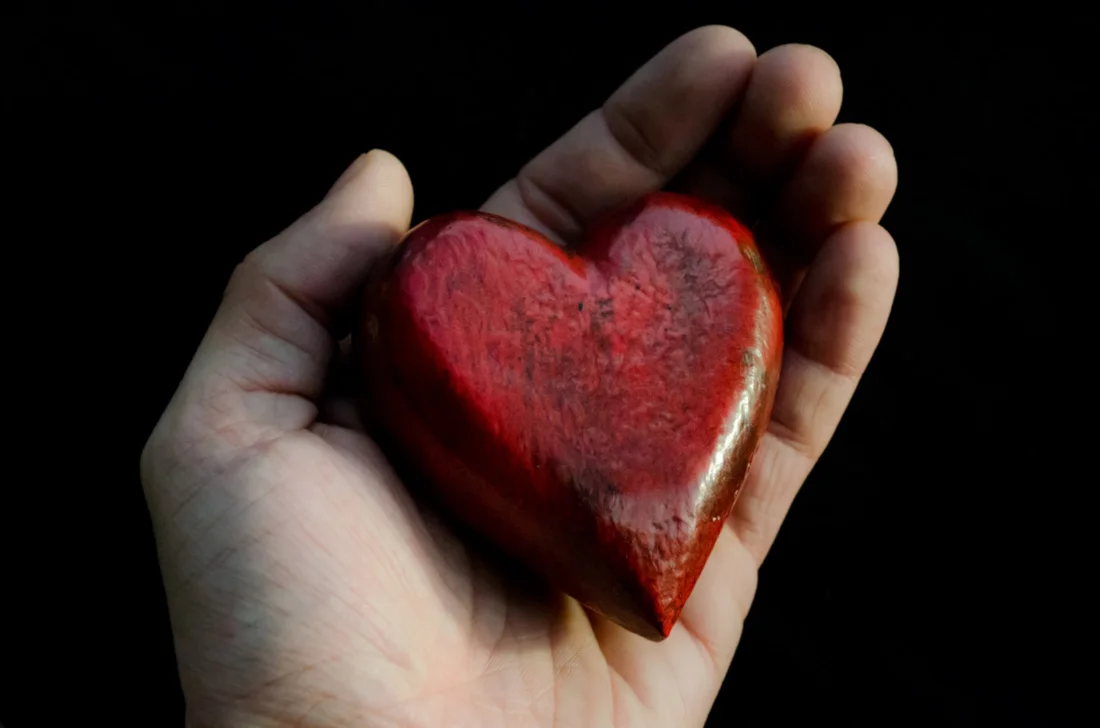
    Why would anyone tell a truly personal story, akin to putting their heart in their hands and offering it for others to see, when the slam process lives up to its name, designed to rate and reject.
     
    Now I know there are many stories told that don’t come from deep in the soul, and there are clearly many people who can tell their stories in this environment, but I think this is either because their souls remain hidden, or even rarer, the teller is able to hold and reveal their soul, no matter what number they are given. 
     
    We lose diversity of story and human experience in a competitive story environment because the thought of being rated is just too much; deep, complex and sensitive human experiences are not heard because the comparing kills it.  Hearts, just like lives and life experiences, are not for judging.
     
    Storytelling is an art, and feedback about how you can improve, what people liked and where they were lost, how they were moved or not, are all great, if sought by the teller.   But a number on a ladder of worthiness is a barrier stopping many people from telling their stories.
     
    So here ends my rant about story competitions.   What do you reckon?

  • How to Begin Sifting and Sorting Your Story Junk

    How to Begin Sifting and Sorting Your Story Junk

    Memory is a funny thing.  
    As storyteller Donald Davis explains it, we have our everyday front mind which is very organised, structured and readily accessible.  In my totally unfounded estimate this is about 10% of the mind.

    And then there is the rest, the attic of the mind where everything is thrown in and it is a completely unordered chaos of years and years of life.  

    And usually the door to the attic is firmly closed.  

    But in order to find our stories we need to open the door and start sifting and sorting, picking up little pieces that lead to other memories that lead to more.  Even, and especially, the memories we associate with shame, pain or fear.

    When we begin this work it is really helpful to note down any scraps of memory because if we don’t capture them, they move out again,  to be buried in the mountain of back-mind, just as quickly as they came forward.

    So here’s a wee exercise for you to try: 

    Decide where you will keep your Story List – the list of memories that may one day be crafted by you into a fully crafted story.  

    I use Evernote. – I have a note that is a long running list called ‘Story ideas’.

    Set the time for four minutes, give or take. 
    Now jot down any significant moments from your life, start with the turning points, the stories you tell again and again, the epicevents that define your life. Write as much information as seems important to you, in order to remember the event.  

    It is important not to filter the list as you write; not to think ‘that’s not a story’ or ‘thats not important’ or ‘I couldn’t tell that story.’ 

    Capture anything and everything that comes to mind.  Whether you ever have the call, impetus, desire or opportunity to inspire you to makethe effort of crafting, practising and telling this moment as a story, for now just grab what comes up.

    Sit with it for the time, even if you can’t think of anything.  Be patient.

    Here are the few from my list:

    • Cup when the horse broke its leg

    • Going down the Mekong river after filling up with water

    • Client having a epileptic seizure in the dock

    • Being kicked by the kangaroo

    bviously this list means nothing to you, but each note reminds me of a whole set of possibly story worthy circumstances.

    That’s all you have to do for now.  If you feel like sharing a few on the Facebook Community Group, it would great to see what you’ve got on your list.  You can join here. 

    nd watch out for more memory prompts in coming blog posts.

  • Want to Find Your Voice? Tell Your Stories

    Want to Find Your Voice? Tell Your Stories

    ‘Find your voice’ seems to be one of those catch cry phrases loaded with meaning that is not altogether obvious. 

    I first came across this idea in a writing workshop.  In order to write well I needed to find my voice, as if it was somehow hiding under the bed with all the missing pens, lost credit cards and sunglasses, and I just wasn’t looking hard enough.

    Slowly I came to understand, what I think it means to ‘find your voice’. 

    It is like finding your way to your best, most expressive, relaxed and imaginative self.  It is a flow from the depths of your being, unfiltered by doubt.

    It can still be targeted, carry a message, have a purpose and with an audience in mind, but it has an authenticity, courage and confidence about it that draws people in.  

    Not everyone, and that is ok.  In fact that is part of the secret of finding our voice.  It doesn’t matter if it doesn’t draw anyone in, it is good for its own sake.

    Using your voice is about not trying to please everyone, but accepting that who we are and what we have to say is enough; it is believing that we will resonate, engage and touch the people who feel and like the energy, character and purpose of the voice.  Your voice.

    The clarion call to ‘find your voice’ is not reserved for writers, but it does seem to be the bedrock of creative pursuits.  Creativity is after all an expression of who we are, and so connecting with our authentic selves, with our voice, then allows our creativity to flow.

    So to storytelling.

    Personal oral storytelling is one of the best ways to find, explore and develop our voice.   For starters storytelling literally is our voice as we speak, so we are working as close to source as we can get.

    But using our voice is not the same as finding our voice.  We have all spoken or heard wooden words, flat line readers, dullsville droning.

    It takes nurturing.  Learning, support, practice and play.

    Finding our stories, crafting them and then learning to tell them, draws us to find our authentic voice. 

    The story itself wants expression, emotion, drama and meaning.  Working with it teaches us what our voice is, it allows us to know who we are and how to show that to the world.

    Finding and using our voice takes courage, but what else are we put on this earth for, if not to give voice to the true expression of who we are?

    Come join us at Story Wise, to begin the journey of finding your voice.

  • Melbourne’s First True Storytelling Meet Up

    Melbourne’s First True Storytelling Meet Up

    Well if I was in any doubt about the interest in personal storytelling, then the ‘launch’ in January of the Melbourne True Storytelling Meet Up has settled it.  

    Within a week of me starting the group, the Meet Up had over 90 members and 22 attending the first Meet Up in March.  

    That is the power of the internet and the tool that is Meet Up, a great idea that differentiates itself from the rest of the net by ensuring a commitment from organisers that they will bring people together in person.  

    The Melbourne True Storytelling Meet Up is described (by me) as:

    A regular Meetup to listen to, practice, get and give feedback (if requested), and enjoy our true personal stories. It is a space learn about, share and grow in story together.  There is no obligation to tell stories, but the invitation will be there…

    Despite social media and our raging communal addiction to screens in whatever version appeals, we are living a bodily experience here on Earth and we cannot replicate, eradicate or substitute the levels of connection when we are together in person, in the flesh, in real time, here and now.

    In person we are all there to see and be seen, we must navigate more complex social messages coming from the flick of an eye, the turn of a shoulder, a flash of mouth, and we are rewarded for our efforts in equal measure.

    Oral storytelling can and is successfully heard on radio, podcast and video, but the best ones are recorded before a live audience because there is a raw humanity that is evoked when we are fully seen and heard by another person, and this rawness is then to a certain degree, captured in the recording.

    So Meet Up, in my view, is one of the most brilliant uses of the internet, and we are set to see how it pans out in practice on March 11 in North Melbourne.  

    Join the Meet Up here and one day the stars might align and you too will come and share, listen and learn about the art of storytelling.

  • Why crafting (and telling) your stories makes you happy

    Why crafting (and telling) your stories makes you happy

    I recently came across an article about personal storytelling in The Atlantic called Life Stories.   It wasn’t an article about the art of oral storytelling, or even about memoir writing, but about the signature human process  of storying the events that happen to us.
     
    One phrase that stood out was what the researchers call ‘autobiographical reasoning’ described as:
    “identifying lessons learned or insights gained in life experiences, marking development or growth through sequences of scenes, and showing how specific life episodes illustrate enduring truths about the self,”
    And it seems to me that this is exactly what happens in personal storytelling. 
     
    In the process of crafting a life event into a tellable tale we do ‘autobiographical reasoning’. 

     We reflect and identify, sometimes for the first time, the meaning of a period or set of events in our life, what we learned and realised and what this tells us about ourselves and the significant encounters we have with others and why. 
     
    Of course we tell stories everyday and so we are always engaged with this process, but often not in a deliberate conscious way, where we take the time to find and choose a spin on the events that is the most useful and positive. 
     
    Monisha Pasupathi, a professor of developmental psychology at the University of Utah says
    “Rehearsal strengthens connections between some pieces of information in your mind and diminishes connections between others. …the things I tell you become more accessible to me and more memorable to me.’
    Hence the reverberations of any story we tell, in a performance or otherwise; it rattles around in our head for days and if we were in any doubt before what it all meant, it settles in as our very own gospel once we have been heard. 

    And if we make it the best gospel we can imagine, that makes sense and teaches us, surely that’s on a par with meditation for a useful happiness practice…. 


  • Taming A Huffy Storytelling Pedant

    Taming A Huffy Storytelling Pedant

    I used to get a bit huffy when people said things like ‘have you been reading any more stories lately?’   

    I would quickly explain to them that I don’t ‘read’ stories, its storytelling, without notes, not recited – you can look your audience in the eye, you are describing pictures in your mind, not telling from remembered or read words, and that this is not a small detail difference, its a quantum leap difference.

    Not surprisingly the conversation took a nose dive; I always sounded tight, brittle, inflexible and pedantic, they felt ticked off, insulted, uncomfortable and defensive, and we moved on or away as soon as possible.

    Eventually I realised it didn’t matter.  Not that it doesn’t matter if tellers read or tell, that is still at the heart of oral storytelling, its just that it doesn’t matter if someone uses the wrong language to describe it, or even understand it.  

    If the conversation keeps going, they’re interested and it seems appropriate, I might mention the difference, but now I have given up the need to set them straight, it is a much gentler explanation.  
    And better still I try to show not tell, through storytelling events, podcasts, and blogs like this!

  • Story Speed: Talk Slow to Tell Fast

    Story Speed: Talk Slow to Tell Fast

    I talk fast, and when I have a time limit and a big story I talk even faster. 

    I talk fast because I just do, and in my excitement at telling a story, I race from one image to the next; I also talk fast because I am terrified I will lose the audience, lose their interest if the story is not cracking along.  (And if the truth be told I do struggle to be attentive if a story is too slow – for me).

    But what I learned from telling folk tales, stories that have been honed over generations, in an environment that was deeply appreciative – an audience of other storytellers, and where there were no time limits, was the art of slow and the beauty of the pause.

    Silence is golden in stories; pauses and slowly drawing the story out allows time for it to be absorbed and comprehended, it allows the images to be developed more richly and for thoughts like ’I wonder what’s coming next?’ to be pondered. 

    Space allows tension to be highlighted and contrasted with other parts of the story.  There is definitely a place for fast, but a story that is all fast is like eating a fast food meal, (a descriptor for not only how long it takes to prepare the food, but how long it takes to consume it), rather than a three course meal.  

    And some people get this from the get go, but not me, my challenge is always to shorten my stories so I can tell them longer.  

    I’d love to hear you thoughts on story speed, both as a teller and a listener…